

Automotive Painter in Canada: Requirements and Certifications
Training, apprentice card, Red Seal, WHMIS: what separates training from certification for automotive painters in Canada.
2hr Technology — Editorial Team
Editorial team
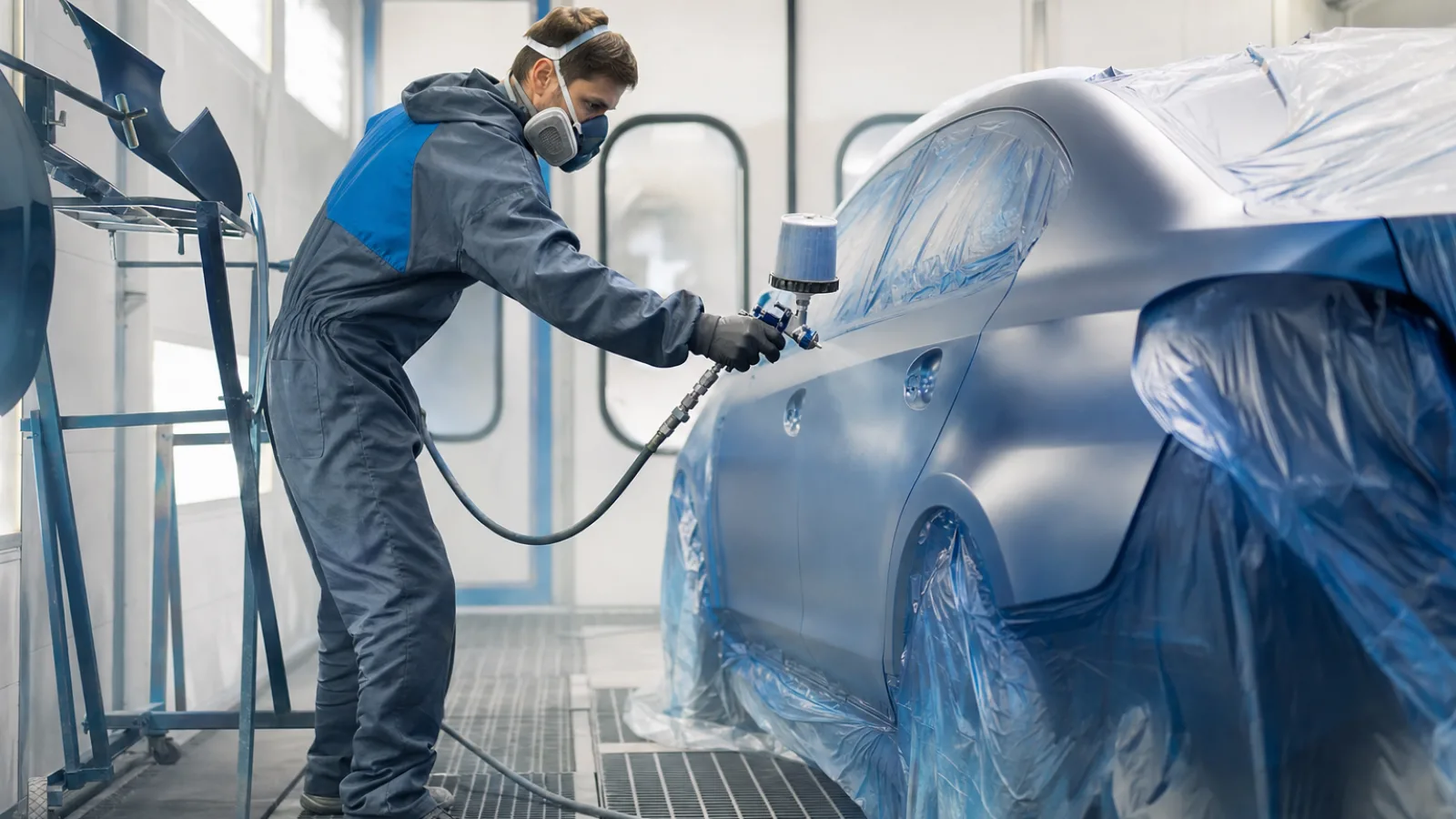
Knowing how to prepare a surface and achieve an impeccable finish does not cover every requirement of the trade. In Canada, an automotive painter’s qualifications also depend on the province or territory and the tasks performed. Training, an apprentice card, Red Seal endorsement and professional development serve different purposes. Here are the key distinctions to help you choose a path, based on requirements verified on November 3, 2026.
Training and qualification are not the same thing
Before choosing a school, identify the trade you intend to pursue. Automotive painting and auto body repair are related activities, but their qualification requirements are not necessarily the same. A rule that applies to dent repair should not automatically be assumed to apply to a position focused on refinishing.
In its profile updated in January 2026, Job Bank Canada states that a high school diploma is usually required and that a two- to three-year apprenticeship in automotive painting is a common route to certification. Certification is voluntary in British Columbia, Manitoba, Saskatchewan and the Atlantic provinces, among other jurisdictions. However, “voluntary” does not mean that an employer will not assess a candidate’s skills. (jobbank.gc.ca)
The right question is therefore not just “What diploma do I need?” but also “What credential will allow me to perform the duties of this job in this region?”
Alberta and Ontario: two different frameworks
In Alberta, the distinction matters from the point of hire. According to the provincial government, restricted activities in the Auto Body Refinisher trade must be performed by a registered apprentice, a certified journeyperson or someone with a recognized certificate. The program published in 2026 consists of two periods, each comprising 1,620 hours of work experience and six weeks of classroom training. Each period is designed to take about one year. Completing a painting course alone does not authorize someone to perform all restricted activities. (tradesecrets.alberta.ca)
In Ontario, the automotive body painter trade, designated 410N, is a non-compulsory certification trade. Skilled Trades Ontario describes a 4,800-hour apprenticeship in 2026, comprising 4,560 hours of on-the-job training and 240 hours of in-school training, generally completed over about two and a half years. The organization distinguishes between a Certificate of Apprenticeship, issued upon completion of the program, and a Certificate of Qualification, earned by passing the certification exam. For this non-compulsory trade, the latter does not need to be renewed. (skilledtradesontario.ca)
For candidates considering a move, these examples show why it is important to check local rules before comparing training programs.
In Quebec, check which joint committee is responsible
In Quebec, the first step is to check whether the establishment and position fall under a decree governing the automotive service industry, then identify the joint committee responsible. A regional card, a school diploma and a certificate of qualification should not be treated as interchangeable documents.
The CPA Lanaudière-Laurentides illustrates how this works. Under the pathway reviewed in 2026, apprentices are registered when they enter the industry covered by the committee. A DEP in auto body repair may qualify for 1,650 hours of apprenticeship credit upon presentation of the diploma. Experience gained elsewhere may also be assessed based on an employer declaration. The diploma can therefore contribute toward progression, but does not automatically confer journeyperson status. Confirm these requirements with the committee responsible for the shop in question. (cpa-ll.com)
Before accepting a position, ask who will handle your registration, how your hours will be reported and what documentation you will need to have your training or experience recognized.
Red Seal: interprovincial recognition
The Red Seal is neither a DEP nor a separate federal licence. It is an endorsement attached to a provincial or territorial certificate, indicating that its holder meets the trade’s interprovincial standard. For automotive painters, it is therefore important to distinguish between obtaining the qualification and earning the endorsement.
Under the Red Seal Program, eligibility to take the exam is determined by the provincial or territorial authority and may vary depending on whether the candidate is an apprentice, a journeyperson or an experienced worker. Requirements verified in 2026 provide for a multiple-choice exam with a maximum duration of four hours and a passing mark of 70%. Fees vary by jurisdiction. Preparation should cover the trade as a whole, not just the tasks performed day to day in a particular shop. (red-seal.ca)
If you plan to work elsewhere in the country, confirm that your certificate will be recognized and check the administrative steps required before you move.
Safety and professional development: distinct requirements
Training on hazardous products serves a different purpose. In its fact sheet revised in May 2026, the Canadian Centre for Occupational Health and Safety distinguishes general WHMIS education from job-specific training. Among other responsibilities, employers must ensure workers understand the hazards of the products they use and the procedures for handling, storing and responding to emergencies involving them. A general online course does not replace training tailored to the shop. (ccohs.ca)
Respiratory protection also deserves particular attention. CNESST notes that isocyanates may be present in paints, primers and clear coats and can cause occupational asthma, among other health effects. For spray application, it recommends, among other measures, supplied-air respiratory protection and a properly ventilated booth; it cautions that cartridge respirators do not provide adequate protection in this situation. Ask how these measures are incorporated into day-to-day work. (reptox.cnesst.gouv.qc.ca)
Technical professional development is a separate category. According to AIA Canada, which administers I-CAR Canada, individuals can earn Platinum recognition by completing courses related to their role, while Gold recognition applies to shops that maintain a qualified workforce. These professional credentials are distinct from qualifications required by a province or joint committee. (aiacanada.com)
Prepare a useful application before applying
When you apply, list your formal education, apprentice or journeyperson status, certificates and professional development courses separately. Specify the issuing organization and the province or region to which each credential applies.
Keep your training records and request employment letters detailing your work periods, hours and duties. This is particularly useful if you want experience gained in another region or abroad to be assessed.
Not all the pages consulted specify an update date or the full cost of a program. Before enrolling, ask for written confirmation of admission requirements, eligible credits, exams and fees that apply to your situation.
Automotive painter openings are posted on Canada Motor Jobs.