

ADAS Specialist: Skills and Qualities for Dealerships
Diagnostics, calibration, communication: the skills and qualities to look for in a dealership ADAS specialist.
2hr Technology — Editorial Team
Editorial team
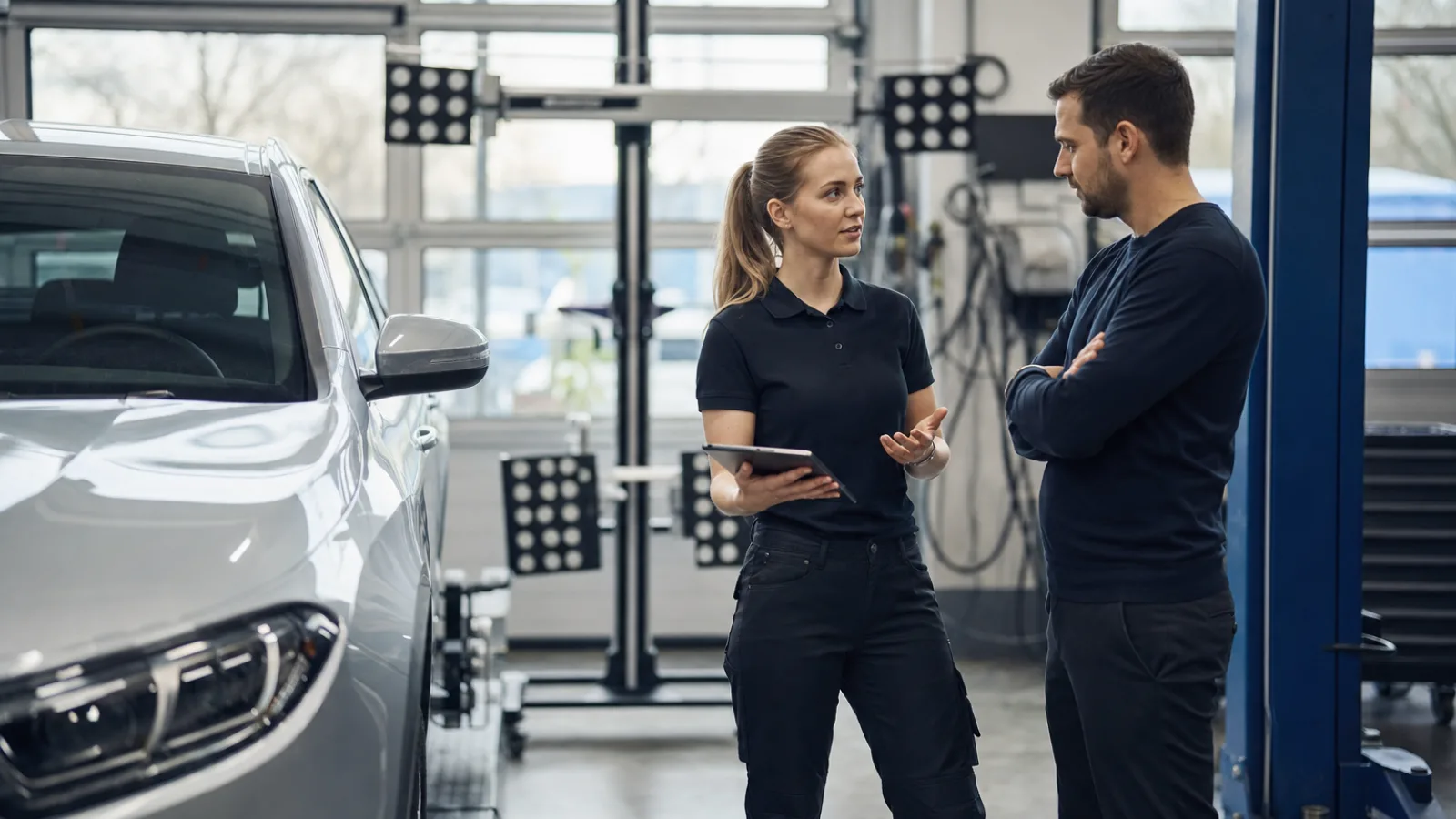
An ADAS specialist is more than a technician who knows how to set up targets in front of a vehicle. Their expertise rests on diagnostics, precise work and the ability to explain their decisions. At a dealership, a strong candidate combines technical knowledge, a methodical approach and sound judgment.
Understand the systems before adjusting them
Blind-spot monitoring, automatic emergency braking and lane-keeping assistance do not all perform the same function. In its presentation, updated in July 2025, the Société de l’assurance automobile du Québec distinguishes between systems that alert the driver and those that intervene in vehicle operation. The SAAQ also notes that rain or snow can affect their performance, particularly when sensors are obstructed. Understanding these limitations is essential knowledge. (saaq.gouv.qc.ca)
When evaluating a candidate, it is therefore worth looking beyond simple acronym recognition. Candidates should be able to explain in their own words what the system does, what information it uses and what might prevent it from working.
Listening then becomes a technical skill. When faced with an intermittent complaint, asking the right questions about the circumstances in which a warning appeared deserves as much attention as connecting the diagnostic tool.
Diagnose rather than replace parts blindly
The 2023 Red Seal occupational standard describes a structured approach to ADAS components: confirm the problem, inspect the components, interpret readings and trouble codes, read wiring diagrams, carry out tests and analyze the results. It also requires knowledge of electricity and electronics, as well as the use of manufacturer technical information. The expected foundation therefore goes well beyond knowing how to launch an automated function on a device. (red-seal.ca)
In an interview, a practical question can reveal more: “How would you distinguish a sensor failure from a problem in its circuit?” The aim is not to get the name of a part right away, but to hear the candidate’s reasoning: what checks they would perform, in what order and using which references.
Curiosity and humility matter as much as confidence here. A compelling candidate should be able to say what they would check before reaching a conclusion. This is a useful angle to highlight when describing experience: show the process, not just the repairs completed.
Calibrate methodically, even under pressure
Calibration is a skill best demonstrated in practice. SkilledTradesBC’s automotive mechanic program, implemented in September 2024, covers static and dynamic methods, equipment and targets, as well as repair verification. Calibration is assessed through practical exercises based on safety, tool use, compliance with the procedure and the accuracy of the results. (skilledtradesbc.ca)
Preparing the vehicle deserves as much attention as the operation itself. In an article published in 2019 and validated in 2025, I-CAR explains that requirements may relate to floor slope, ride height, tire dimensions or vehicle load. Some procedures also specify conditions concerning fuel or the position of the spare tire. These parameters must be checked against the applicable procedure; an example should not be treated as a universal rule. (rts.i-car.com)
Attention to detail has a very practical meaning here: prepare the work area, check the references and repeat a measurement if any doubt remains. This discipline is more important to look for than speed alone.
Judgment also means knowing when to stop an operation. If a prescribed condition is not met, the right professional response is to explain the issue and ask for it to be corrected, rather than improvise to meet the delivery time.
Document work and collaborate with the whole team
The quality of the service record is part of the job. In its glass claims procedure, updated in September 2023, British Columbia’s public insurer ICBC calls for retaining, among other things, photographs of the component involved, the type of calibration performed and the results confirming successful completion. This requirement applies to its glass program and should not be presented as a uniform rule for all Canadian dealerships. It nevertheless illustrates the importance of traceability. (mdp.partners.icbc.com)
To coordinate work at a dealership, it is important to ensure a clear handoff between the specialist, the service advisor and other team members. What was found? Which procedure was followed? Is the work complete? What checks remain? The service record should provide clear answers to these questions.
Communication with the customer requires the same precision. Specialists should be able to explain the work without overwhelming the customer with acronyms or promising more than has been verified.
For recruiters, asking candidates to summarize a diagnosis in plain language is a useful complement to a technical assessment. Clarity does not replace expertise; it makes that expertise easier to share.
Build a specialization and keep learning
The path starts with a solid professional foundation. In its profile, amended in March 2025, Job Bank Canada says that secondary school and vocational training are usually required for automotive mechanics. Qualification requirements vary by province or territory. Qualified mechanics can obtain Red Seal endorsement after passing the relevant interprovincial examination. It is therefore important to distinguish trade qualification from targeted ADAS training. (jobbank.gc.ca)
In Quebec, CPA Québec offers ADAS training that covers technology recognition, diagnostics and calibration of different sensors. Its course information lists familiarity with the diagnostic approach and access to the necessary equipment among the prerequisites. Consulted in November 2026, the page does not specify when it was last updated. The course illustrates the value of learning that combines an understanding of systems with hands-on use of tools. (formation.cpaquebec.com)
When choosing further training, candidates should look for supervised exercises and opportunities to justify their decisions. Employers, in turn, can set aside training time, provide support and help specialists progress toward greater independence.
In an application, it is better to describe the equipment used, the methods practiced and one’s level of independence precisely than simply claim to be an “expert in technology.”
Dealership technician and specialist openings are listed on Canada Motor Jobs.